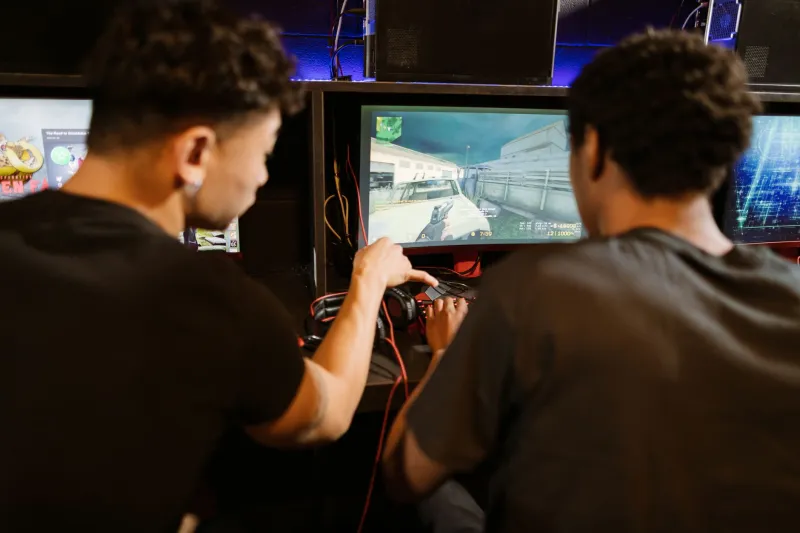
Thank the Nerf: How Getting Your Crutch Kicked Out Turns You Into a Real Player

There's a specific kind of grief that hits when you load up your favorite game, check the patch notes, and see your main character staring back at you from the nerf list. Damage reduced. Cooldown increased. That one ability you built your entire playstyle around? Gutted. It stings. Sometimes it feels personal.
But here's the thing nobody tells you while you're rage-posting in the subreddit: getting nerfed might be the single most valuable thing that can happen to your competitive development. The players who come out the other side of a brutal patch aren't just survivors — they're fundamentally better at the game.
The Crutch You Didn't Know You Were Leaning On
When an ability is overpowered, it doesn't just win fights. It also quietly covers up everything you're doing wrong. Bad positioning? The burst damage bails you out. Poor resource management? The low cooldown resets before it matters. Weak game sense? The raw numbers carry you past the consequences.
This is what competitive coaches call a "masking mechanic" — a tool so strong it hides skill gaps that would otherwise get you punished. You feel powerful. Your stats look clean. But underneath the surface, the fundamentals are soft.
Look at what happened in the League of Legends community around Kassadin's repeated nerfs across 2013–2015. When the champion was dominant, a massive portion of his player base was riding the kit rather than the craft. After successive patches brought his numbers in line, the players who stuck with him had to learn roam timing, mana discipline, and late-game scaling decisions at a much deeper level. The ones who did? They climbed harder and more consistently than they ever had during the broken era.
The Adaptation Tax
Every nerf comes with what you could call an adaptation tax — a temporary performance dip you have to pay before the gains kick in. Your win rate drops. Your confidence wobbles. You start second-guessing decisions that used to feel automatic.
This phase is uncomfortable, and it's also exactly where the growth happens.
When streamer and competitive Valorant player Haley "Haze" Dominguez talked about the Jett nerfs that hit in early 2022, she described the first two weeks as "genuinely humbling." The dash changes and smokes reduction forced her to rethink her entire approach to dueling. She couldn't just blade storm her way out of bad positions anymore. She had to play smarter angles, communicate more with her team, and develop a secondary kit comfort she'd never bothered building.
Six months later, she was posting better stats than she'd ever hit during Jett's dominant run. "The nerf made me actually learn the game," she said. "Before that, I was just learning Jett."
That distinction matters more than it sounds.
Mechanical Depth Lives Below the Easy Mode
Here's what power creep quietly does to a player base over time: it compresses the skill ceiling. When one option is clearly dominant, everyone gravitates toward it, and the collective skill expression of the community narrows. Nerfs force horizontal exploration — players branch out, discover new interactions, and build a wider mechanical vocabulary.
In Street Fighter 6, when certain dominant characters received balance adjustments in 2024, the competitive community initially split between frustration and curiosity. The players who leaned into curiosity discovered that the counterplay options they'd been ignoring were actually deep and rewarding. Matchup knowledge they'd never needed suddenly became essential. Drive system management, which many had been brute-forcing through, required genuine understanding.
The result wasn't a weaker game — it was a richer one. And the players who adapted came back with a toolkit that made them dangerous regardless of the meta.
Pro Perspective: Restriction as a Training Tool
Some of the best competitive players in the world have started deliberately practicing with nerfed or lower-tier options as a training method — not because they're masochists, but because they understand what the friction teaches.
Apex Legends pro Marcello "Marz" Vega has talked openly about spending full practice sessions running weaker legend picks to sharpen his positioning and decision-making. "If I can win engagements on a kit that doesn't bail me out," he explained in a community stream Q&A, "then when I'm back on my main, I'm playing with the ability and the fundamentals. That's a different level."
This is essentially the gaming equivalent of athletes training at altitude or with resistance bands. You deliberately introduce difficulty so the baseline becomes easier by comparison.
What to Actually Do When Your Main Gets Nerfed
Instead of immediately switching characters or drowning in patch-note despair, try treating the nerf as a structured challenge. Here's a practical approach:
Audit your replays pre-nerf. Look specifically for moments where the overpowered ability bailed you out of a mistake. Those moments are your curriculum.
Set a 30-game commitment. Don't jump ship after five losses. Give yourself enough volume to actually adapt rather than just react.
Identify what the kit still does well. Most nerfs target one or two mechanics, not the entire character. Find the untouched strengths and build around them.
Track non-damage metrics. Win rate will dip. That's expected. Watch positioning quality, objective control, and decision timing instead. Those are the real indicators of growth.
The Long Game
The players who dominate competitive scenes over years — not just during one broken meta — are almost always the ones who've been through multiple nerf cycles and came out the other side. They've been forced to adapt, rebuild, and expand. Their skill set isn't tied to one patch's balance. It's tied to the game itself.
Getting nerfed hurts. It's supposed to. But pain in gaming, like in any competitive pursuit, is usually just growth in disguise. The next time the patch notes ruin your morning, take a breath — and then get to work. Your ceiling just got a lot higher.