When the Thrill Fades: Why Your Character Feels Weak at Level 50 and How to Reclaim the Domination
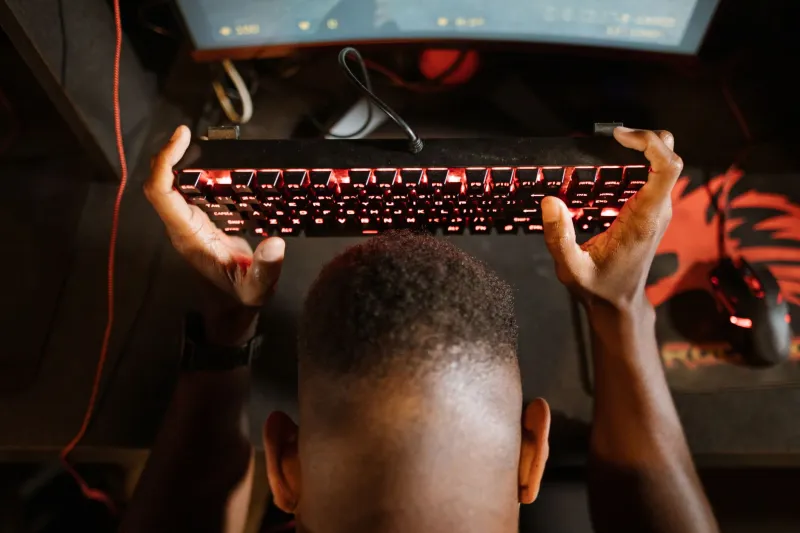
You remember the first time you one-shot that boss that had been wrecking you for twenty minutes straight. Pure electricity. Your hands might've even shaken a little. Fast forward six hours of playtime, and you're blasting through entire rooms of enemies on autopilot, barely registering the carnage on screen. Same character. Same build. Technically more powerful than ever — yet somehow, completely hollow.
Welcome to the power plateau. It's real, it's frustrating, and it happens to almost every player who puts serious time into an action game. The good news? Once you understand why it happens, you can actually do something about it.
Your Brain Is Literally Working Against You
Here's the uncomfortable truth: your brain is the villain in this story. Dopamine — the neurochemical responsible for that rush you feel when you pull off something insane in-game — isn't triggered by being powerful. It's triggered by unexpected rewards and progress signals. Neuroscientists call this hedonic adaptation, and it's the same reason your brand-new car stops feeling special after two weeks.
When you first picked up that overpowered ability or slotted in a broken build, your brain fired off a reward response because it was new. The gap between your old capability and your new one was wide enough to register as a genuine surprise. But as you repeat the same loops — same combos, same enemy types, same environmental reactions — your brain downregulates its response. The input hasn't changed; your neural baseline has just quietly adjusted upward to meet it.
Game designers know this. In fact, the entire discipline of progression system design is essentially a war against hedonic adaptation.
How Smart Games Keep Re-Igniting the Spark
The best action games on the market right now don't just give you power — they manufacture the perception of power spikes at carefully calculated intervals. Here's how they do it.
Surprise Unlocks and Delayed Payoffs
Games like Hades II and Elden Ring are masterclasses in staggered revelation. Rather than front-loading your full kit, they drip-feed abilities and synergies in a way that creates consistent "wait, I can do THAT?" moments deep into a playthrough. The surprise unlock doesn't need to make you objectively stronger — it just needs to feel architecturally different from what you've been doing.
This is why build-pivoting mechanics are so psychologically potent. When a new item or upgrade forces you to rethink your entire approach, your brain re-engages with the power fantasy from scratch. You're not coasting anymore. You're discovering again.
Skill-Based Momentum Systems
Combo multipliers, style meters, and momentum-dependent damage scaling are all tools designed to make you — not your stats — feel like the source of the power. Games like Devil May Cry 5 built their entire identity around this principle. When your damage output is tied to your execution quality, the ceiling of how powerful you feel is always slightly out of reach. You can always play better. You can always feel more dominant.
This is fundamentally different from a flat stat increase. A number going up eventually stops mattering. But landing a flawless no-hit run against a boss you've fought fifty times? That hits every single time because you did something impressive, not your gear.
Environmental Destruction Scaling
Here's an underrated one: physical feedback from the game world. When your attacks start cracking walls, toppling structures, or triggering chain-reaction explosions, the world itself is reacting to your strength — and that visual and auditory reinforcement bypasses the numbing effect of pure stat growth.
Remnant II and Returnal both lean into this hard. The environments don't just absorb your damage; they respond to it dramatically. That responsiveness creates a feedback loop that keeps power feeling felt rather than just calculated. Your character isn't stronger because a number says so. Your character is stronger because the entire arena is falling apart around you.
Practical Ways to Reclaim the Rush
Okay, so you're in the plateau and you want out. Here are some actual moves you can make right now.
Reset your reference point. Load up a mid-game area you haven't touched in a while and go completely unhinged. Sometimes all your brain needs is a contrast moment — a reminder of how far your build has actually come. Stomping through content that used to challenge you is a legitimate way to re-trigger that dominance response.
Impose artificial constraints. This sounds counterintuitive, but try a self-imposed challenge run: no healing items, limited ability usage, whatever fits the game. When you succeed under pressure, the win feels earned in a way that routine stomping never will. The difficulty re-introduces the surprise element your brain craves.
Switch your build entirely. Even if your current setup is optimal, blowing it up and trying something weird can reboot your engagement. You'll feel underpowered at first — and that friction is exactly what makes the eventual power curve feel real again. Starting from relative weakness gives you somewhere to climb.
Lean into PvP or challenge content. Human opponents and high-tier challenge rooms don't scale down to meet your expectations. They push back. And when something pushes back against a maxed-out character, every victory registers as a genuine achievement rather than background noise.
The Designer's Dilemma — and What It Means for You
Game developers are essentially trying to solve an impossible equation: make players feel unstoppable without making the game feel effortless. The plateau is an inevitable side effect of success — it means you've mastered something, which is actually a win. But mastery without new mountains to climb is just stagnation.
The best action games right now understand this tension and build their entire post-launch content strategies around fighting it. Seasonal rotations, new enemy archetypes, scaling endgame content — these aren't just content drops. They're deliberate attempts to shift your baseline and force your brain back into discovery mode.
As a player, knowing this gives you an edge. When the thrill dips, it's not the game getting worse and it's not your enthusiasm dying. It's your brain doing exactly what brains do. The rush isn't gone — it just needs a new angle of attack.
And honestly? Finding that angle is its own kind of power move.