Wired to Win: The Brain Training Secrets That Separate Elite Gamers from Everyone Else
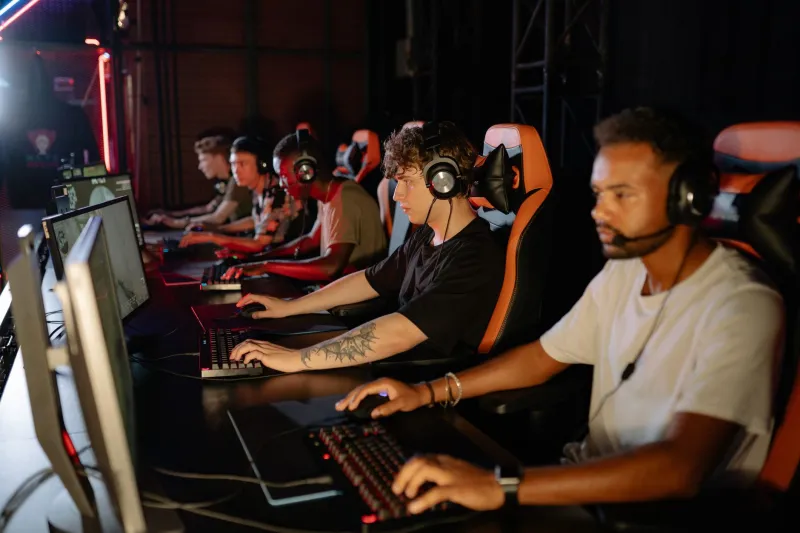
Everybody's got a friend who swears they "could go pro if they just had more time." But here's the uncomfortable truth: raw talent only carries you so far. The players grinding on championship stages at events like ESL Pro League or the Valorant Champions Tour aren't just faster on the sticks — they've built their brains differently. And the wild part? Science can actually explain how.
We went deep on the neuroscience, talked to esports coaches, and dug through the latest cognitive research to figure out what separates the top one percent from the rest of us. Spoiler: some of these techniques are things you can start using tonight.
Your Brain on Gaming: What's Actually Happening Up There
When you're mid-match and the action explodes — enemies pushing from three angles, your cooldowns are up, and your team is screaming in comms — your brain is doing something genuinely remarkable. It's running a high-speed triage operation, pulling from your prefrontal cortex for decision-making, your cerebellum for motor control, and your visual cortex for processing everything on screen simultaneously.
Dr. Evelyn Rhodes, a cognitive neuroscientist who's consulted with several North American esports organizations, puts it bluntly: "Elite gamers have measurably different neural pathways than casual players. It's not magic — it's myelination. The more you practice a specific action or decision pattern, the faster and more efficient that neural signal becomes."
In plain terms? Repetition builds a faster brain. But how you repeat matters enormously.
Reaction Time Is a Skill, Not a Gift
One of the biggest myths in gaming culture is that reaction time is something you're born with. Some people do have genetic advantages in baseline neural processing speed — but the gap is smaller than most players assume, and it's absolutely trainable.
Marcus "Blitz" Carver, a head coach for a Tier 1 FPS roster (he asked us not to name the org), describes what his team calls "stimulus-response drilling."
"We don't just have players aim-train for an hour and call it done," he explains. "We isolate specific scenarios — a flash coming from the left, a sound cue from below — and we drill the response until it's automatic. The goal is to move that decision out of conscious thought entirely."
This mirrors what sports psychologists call "automaticity" — the point where a complex action requires almost no active cognitive load. Think about how you don't consciously think about each step when you walk. Elite gamers get their most-used mechanics to that same level.
Practical takeaway: Use aim trainers like Aimlabs or KovaaK's, but don't just free-play. Build custom scenarios that mirror exact situations from the games you play competitively. Specificity beats volume.
The Pressure Problem: Why You Choke and How to Stop
You've been there. A ranked match is on the line, your hands get a little clammy, and suddenly you're making decisions you'd never make in a casual lobby. That's cortisol doing its thing — your body's stress response is flooding your system, narrowing your attention and disrupting fine motor control.
The fix isn't to care less. It's to train your nervous system to tolerate that state without falling apart.
Coaches in the esports space have borrowed heavily from traditional sports psychology here. Breathing protocols — specifically box breathing (inhale four counts, hold four, exhale four, hold four) — have become standard pre-match rituals for many pro teams. The technique activates the parasympathetic nervous system, dialing down that cortisol spike before it derails your performance.
Beyond breathing, Dr. Rhodes points to something called "pressure inoculation training" — deliberately practicing in high-stress simulated environments so that your brain learns to perform through discomfort rather than shutting down.
"If the most pressure you ever feel is in ranked matches, your brain has no reference point for managing it," she says. "Scrimmage with stakes. Set consequences for losses in practice. Build callous to the feeling."
Sleep, Nutrition, and the Stuff Coaches Are Actually Obsessed With
Here's where a lot of players leave points on the table. You can run the most disciplined aim-training routine in your server, but if you're surviving on energy drinks and four hours of sleep, you're actively working against yourself.
Sleep is when your brain consolidates the motor patterns and decision-making frameworks you built during the day. A study out of Harvard Medical School found that sleep deprivation degrades reaction time at roughly the same rate as alcohol consumption. Think about that the next time you're tempted to grind until 3 a.m. before a tournament.
Coach Carver's team follows what he calls a "performance window" approach — identifying each player's peak cognitive hours (usually mid-morning or early afternoon for most people) and scheduling the highest-intensity practice during that window.
"Nutrition matters too, but we keep it simple," he adds. "Consistent meals, hydration, and limiting sugar crashes during long sessions. Nothing revolutionary — just discipline."
Building Your Own Mental Training Stack
You don't need a coaching staff or a neuroscience consultant to start applying this stuff. Here's a straightforward framework you can build into your current routine:
1. Deliberate practice over mindless grinding. Every session should have a specific skill target. "Get better at aiming" is not a target. "Improve flick accuracy on moving targets at medium range" is.
2. Scenario drilling. Recreate high-pressure in-game moments in controlled practice environments and run them repeatedly until your response is automatic.
3. Pre-session breathing protocol. Two to three minutes of box breathing before you queue up. It sounds small. It compounds over time.
4. Review your gameplay footage. The best athletes in any discipline study film. VoDs reveal decision-making patterns you're completely blind to in the moment.
5. Protect your sleep. Non-negotiable. Aim for seven to nine hours, especially around competitive play.
The players dominating leaderboards right now aren't operating on a different plane of existence — they've just built better systems. Your brain is trainable. The only question is whether you're willing to put in the work to rewire it.
UltraPower Games is here for the grind. Let's get to work.