Your Time, Your Rules: How Action Games Win or Lose Based on How They Treat Your Hours

Photo: intense action gamer focused playing video game controller dark room, via www.dailyhealthsupplement.com
Here's a question that doesn't get asked nearly enough in gaming conversations: whose time is it, anyway?
When you boot up an action game, you're entering into an unspoken contract with the developers. They've built a world, a system, a set of challenges. You're bringing your attention, your reflexes, and — maybe most importantly — your hours. How a game treats those hours says everything about its design philosophy, its target audience, and whether it deserves a spot on your hard drive long-term.
This isn't a debate about easy modes or accessibility settings, though those conversations matter too. This is about something more fundamental: the underlying design DNA that determines whether a game respects your agency over your own time or quietly holds it hostage.
The Rush: When Speed Is the Point
Let's talk about the games that get out of your way. Fast, focused action titles that deliver a complete experience in two to four hours, or games built around short, intense sessions that feel satisfying whether you play for twenty minutes or four hours. These designs aren't lazy — they're deliberate, and pulling them off well is genuinely difficult.
The psychology here is rooted in what designers call intrinsic motivation. When a game is tight and purposeful, every minute feels earned. You're not padding through filler content to unlock the good stuff. The good stuff is right there, front-loaded and unapologetic. Players who gravitate toward these experiences tend to value efficiency. They want intensity without commitment overhead. And when a game delivers that, the emotional payoff per hour is incredibly high.
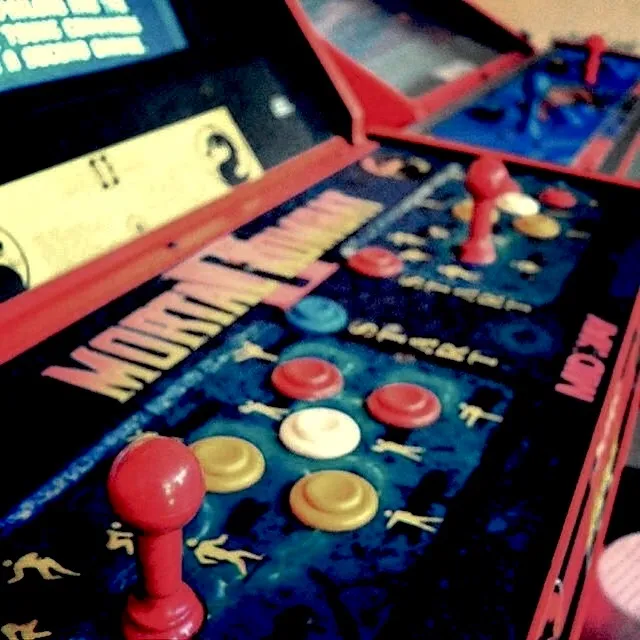
Think about the arcade DNA that still runs through certain modern action titles. That lineage is built on the premise that a session can be complete in itself. You don't need to remember where you left off. You don't need to manage a build or track a quest log. You just play, and the game meets you exactly where you are.
For casual players — and let's be real, a huge chunk of the US gaming audience falls into this category at some point in their lives — this design philosophy is a lifeline. It's the difference between a game that fits into a busy adult schedule and one that gets uninstalled after two weeks because life got in the way.
The Grind: When Difficulty Is the Design
Now flip it. Some of the most beloved action games of the past decade are built on the explicit premise that they will take a lot from you before they give anything back. Punishing difficulty, deep mechanical systems that take dozens of hours to fully understand, and progression structures that reward obsessive engagement over casual dipping.
The psychology behind why players chase these experiences is genuinely fascinating. There's a well-documented phenomenon in behavioral psychology around variable reward schedules — the same mechanism that makes certain other digital products sticky in less healthy ways. But in a well-designed action game, this translates into something more meaningful: the satisfaction of mastery. When you finally clear a boss that's destroyed you thirty times, the dopamine hit is real and earned. You didn't get lucky. You got better.
Hardcore players in the US gaming community often describe these games in terms that sound almost athletic. They talk about practice, muscle memory, learning the meta. There's a reason competitive gaming culture and souls-like culture have significant overlap — both communities are built around the idea that difficulty is a feature, not a bug, and that the time you invest is what gives the achievement its value.
The grind, when it's honest, functions as a respect mechanism. The game is saying: this is hard, it's supposed to be hard, and if you put in the work, you'll be part of a community that knows exactly how hard it was.
Where Design Goes Wrong
Here's where things get messy. The problems don't come from choosing one philosophy or the other — they come from designers who confuse the two, or worse, who use the language of one while actually practicing the other.
Artificial difficulty is the most common offender in the grind category. There's a meaningful difference between a game that's hard because its systems are deep and its challenges are thoughtfully designed, and a game that's hard because the developers padded content with repetitive enemy waves, excessive backtracking, or progression gates tied to real-money purchases. Players are smart enough to feel that difference, even if they can't always articulate it. One feels like a mountain worth climbing. The other feels like a treadmill someone is charging you to run on.
On the rush side, the failure mode is hollowness. A short, fast action game that delivers no emotional resonance — no memorable moments, no sense of stakes — leaves players feeling like they consumed something without actually experiencing it. Speed without substance is just emptiness with better frame rates.
The studios that consistently get this right are the ones that start with a clear answer to one simple question: what do we want the player to feel when they're done? Everything else — session length, difficulty curve, progression systems — flows from that answer.
What Player Behavior Actually Tells Us
Look at how people actually play action games in the wild, and some interesting patterns emerge. Completion rates for major action titles hover surprisingly low — industry data consistently shows that a significant percentage of players never finish games they buy. But engagement metrics tell a more nuanced story. Players who bounce early from a tough game aren't always quitting because it's too hard. Often, they're quitting because the game hasn't yet given them a reason to care enough to push through.
This is where onboarding and early-game design become critical. The best hardcore action titles earn their difficulty by first making the player fall in love with the world, the movement, the feel of the combat. They front-load joy, then introduce friction. The games that lead with friction and expect players to find the joy themselves have a much steeper dropout curve.
Casual-friendly action games face the opposite challenge. They need to deliver enough depth that players don't feel patronized, while keeping the surface accessible enough that the barrier to entry stays low. The sweet spot is what game designers sometimes call "easy to learn, hard to master" — a phrase that's been around forever because it describes something genuinely difficult to achieve.
The Power Move: Letting Players Choose
The smartest design trend in modern action gaming might be the one that sidesteps the whole debate: giving players meaningful control over their own experience without watering down the core design. This isn't about adding an easy mode and calling it a day. It's about building systems that flex — that let a speedrunner and a story-focused casual player both find their version of the game without either experience feeling compromised.
When that works, it's one of the most powerful things a game can do. It says: we built something worth your time, and we trust you to decide how much of it you want to give us.
That's the real respect play. Not assuming every player wants a brutal challenge, and not assuming everyone wants to be coddled. Just building something great and letting the player meet it on their own terms.
That's how you build a game people talk about for years. And in a market this crowded, that's the only power move that actually matters.