Your Game Didn't Get Worse — You Did: The Real Truth Behind Balance Updates
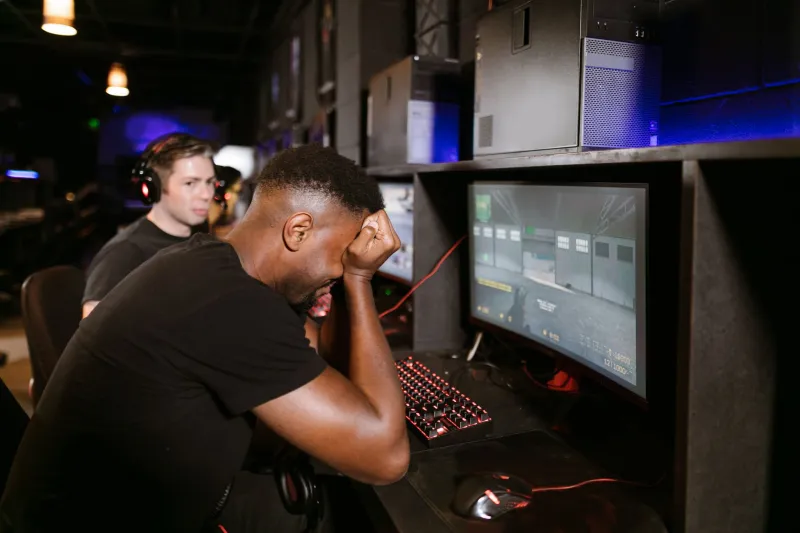
Every time a balance patch drops, the forums explode. Reddit threads hit the front page. Discord servers go nuclear. Streamers record fifteen-minute rants about how the developers have "no idea what they're doing." And somewhere in the middle of all that noise, a quieter truth gets completely buried: the balance update you're grieving over might be the single best thing that ever happened to your skill level.
Yeah, we said it. Hear us out.
The Crutch You Didn't Know You Were Using
Here's a concept that doesn't get talked about enough in competitive gaming circles — passive skill dependency. It's what happens when a mechanic, ability, or loadout is so effective that it starts doing your thinking for you. You're not playing the game anymore. You're riding it.
This isn't a knock on players who use strong options. That's just smart play. But there's a difference between leveraging power and leaning on it so hard you forget how to stand on your own. When that crutch gets kicked out from under you — through a nerf, a rework, or a meta-shifting patch — the fall feels brutal. What most players miss is that the fall is the lesson.
Take what happened in Street Fighter 6 when certain drive rush mechanics were tightened in post-launch updates. The immediate community reaction was predictably loud. Players who had built entire pressure strategies around drive rush cancels felt like the rug got pulled. But the players who adapted? They came back with a deeper understanding of neutral game fundamentals that the original mechanic had been quietly masking. The ceiling didn't lower — it just stopped hiding how far some players still had to climb.
When "Broken" Was Doing the Work For You
Let's talk about Destiny 2 for a second, because few live-service games have a longer, messier history of controversial balance swings. The Titan Bubble meta, Felwinter's Lie, pre-nerf Prometheus Lens — every time Bungie swung the nerf hammer, a portion of the community acted like the game was over. And every single time, the players who stuck around and adapted came out with a more complete understanding of their class, their builds, and the game's underlying systems.
The irony is almost poetic. The "broken" version of the game was quietly doing the heavy lifting. When it stopped, players discovered whether they actually understood the game — or whether they just understood the exploit.
This pattern repeats across basically every competitive title that has survived long enough to build a real player base. Apex Legends has gone through multiple seismic meta shifts. Valorant has seen agents go from must-pick to benched and back again. Overwatch 2 has rebalanced core roles multiple times. In every case, the players who came out stronger weren't the ones who quit or complained loudest. They were the ones who treated the patch like a new puzzle instead of a personal attack.
Why Fighting the Old Meta Is Keeping You Stuck
There's a psychological phenomenon worth naming here — meta grief. It's the competitive gaming version of refusing to accept change, and it's one of the most reliable ways to plateau permanently.
Meta grief looks like this: your main gets nerfed, so you spend the next three weeks playing them anyway, losing more, blaming the patch, and telling yourself you'd be winning if things were "how they used to be." Meanwhile, the players who adapted two weeks ago have already climbed past you.
The old meta is gone. The balance team has moved on. The top players have moved on. And as long as you're still fighting for a version of the game that no longer exists, you're essentially competing with one arm tied behind your back — and choosing to do it.
Here's the harder truth: if your rank drops after a nerf, the nerf isn't the reason. It's the reveal. It's showing you exactly how much of your performance was your skill versus your kit's power budget. That information is genuinely valuable. Most players just refuse to accept it.
The Players Who Get Stronger After Nerfs
If you watch how top-ranked players respond to major balance changes, you'll notice something consistent. They don't spend long mourning. They immediately start stress-testing the new version of the game, figuring out what still works, what's been quietly buffed by proxy, and where the new power windows are.
This isn't just mindset — it's a learnable skill. Adaptability is, arguably, the most transferable ability in all of competitive gaming. It's what separates players who peak at a certain rank during one meta and stall out, versus players who keep climbing across multiple patches and game versions.
The pros who've been at the top across multiple meta cycles — in games like League of Legends, CS2, or Tekken 8 — aren't there because the game never changed. They're there because they changed with it. Every nerf they survived made them more complete players. Every rework they adapted to added a new layer to their understanding of the game's core systems.
How to Actually Use a Nerf to Level Up
So what does this look like in practice? A few things worth building into your routine when a big patch drops:
Stop reading the patch notes like a eulogy. Read them like a scouting report. What changed? What does that open up? What playstyles just got quietly buffed because the thing that countered them got nerfed?
Go back to basics. Nerfs often strip away the shortcuts. Use that as an excuse to revisit fundamentals — positioning, resource management, decision-making under pressure. These are the skills that transfer across every meta.
Track your actual performance data. Not your feelings about the patch. Your real numbers. Win rate, accuracy, average damage — whatever the game tracks. Let data tell you whether you actually got worse, or whether you're just playing a different game now.
Give it time before you judge. The first week after a major patch is the messiest. Everyone is still figuring out the new landscape. Your early results aren't representative. Commit to at least two to three weeks of genuine adaptation before drawing conclusions.
The Ceiling Was Always Higher Than You Thought
Here's the thing about power ceilings in competitive games — they're almost never where you think they are. Most players hit a wall and assume they've maxed out, when in reality they've just maxed out their current set of habits. A balance update that forces you to abandon those habits is uncomfortable precisely because growth is uncomfortable.
The devs aren't out to get you. The meta shift isn't the end of your run. It's an invitation to find out how good you actually are when the game stops carrying you.
At UltraPower Games, we're not here to tell you nerfs feel good — they don't. But dominating every game means dominating every version of it. And the players who've figured that out? They're already climbing while everyone else is still posting angry patch notes reactions.
Time to decide which kind of player you want to be.