Stop Studying the Patch Notes and Start Studying Your Opponent
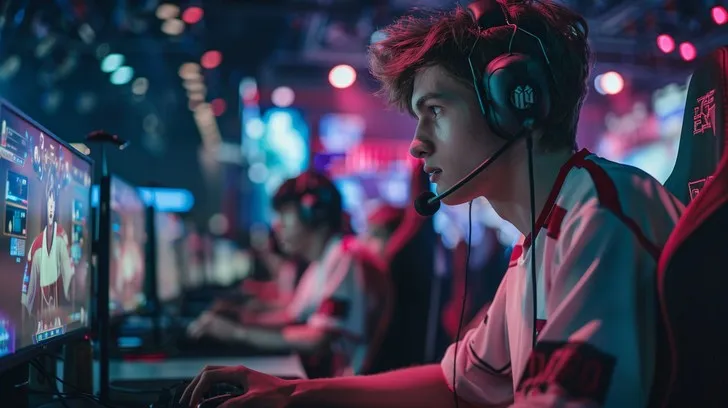
Photo: competitive gamer focused intense concentration watching screen esports, via images.stockcake.com
Every time a new patch drops, the forums explode. Spreadsheets get updated. Discord servers melt down. Players spend hours memorizing damage numbers, cooldown tweaks, and stat adjustments like they're cramming for a final exam. And then they log in, get outplayed by someone who couldn't recite a single patch note, and wonder what went wrong.
Here's the uncomfortable truth: the skill that actually separates good players from elite ones isn't mechanical. It isn't even game knowledge in the traditional sense. It's something harder to quantify — and way more powerful.
Call it game sense. Call it predictive awareness. Call it reading the room at 60 frames per second. Whatever you call it, it's the invisible engine running underneath every dominant performance you've ever watched and thought, how did they know that was coming?
What Game Sense Actually Is (And What It Isn't)
Let's clear something up right away. Game sense isn't some mystical gift that pro players were born with. It's not about having faster reflexes or a higher IQ. At its core, game sense is pattern recognition applied in real time — the ability to absorb what an opponent is doing, cross-reference it against everything you've seen before, and generate a prediction about what comes next before it happens.
Think about a veteran NFL safety reading a quarterback. He's not waiting to see where the ball goes. He's watching the QB's eyes, the receiver's route, the offensive line's formation — and he's already moving before the throw. That's exactly what top-tier action gamers are doing, just compressed into milliseconds and expressed through a controller or keyboard.
The neurological basis for this is well-documented. Repeated exposure to patterns builds what cognitive scientists call chunking — the brain's ability to group complex sequences of information into single recognizable units. A beginner sees ten separate pieces of data in a fight. An expert sees one: he's about to go for the grab.
That compression is the skill. And it can be trained.
Why Patch Notes Are a Trap (For Some Players)
None of this means patch notes are useless. Understanding the meta matters. Knowing your kit matters. But there's a version of game knowledge that becomes a crutch — one where players are so focused on optimizing their build or memorizing ability interactions that they never develop the real-time reading skills that make all that knowledge useful under pressure.
You can know every damage number in the game and still lose to someone who's figured out that you always dash left when you're low on health. Opponents aren't spreadsheets. They're creatures of habit, emotional decision-makers, pattern-repeaters. And if you're spending your mental energy recalling patch notes mid-match, you're burning bandwidth that should be going toward reading what's right in front of you.
The best players in any competitive scene — whether it's fighting games, tactical shooters, or action RPGs — treat their opponents like puzzles to be solved in real time. The patch notes are context. The opponent is the actual game.
How to Actually Build Predictive Awareness
Okay, so how do you develop this? Because "pay more attention" is not a training plan.
Start with post-match film work — on yourself. Most platforms give you replay access, and most players never use it. Watch your losses. Not to cringe at your mistakes, but to identify the moments where your opponent made a move you didn't see coming. Ask yourself: were there signals before that move? A positioning shift? A hesitation? A pattern in how they'd been playing the previous 30 seconds? You'll be surprised how often the "surprise" move was telegraphed three actions earlier.
Create a mental scouting report in the first two minutes of every match. Elite players aren't waiting until mid-game to start reading their opponent. They're running experiments early — throwing out probing actions, watching how the other player responds, cataloging tendencies. Does this person always push after a knockdown? Do they panic-spam when pressured? Do they play more conservatively when they're ahead? Two minutes of intentional observation builds a profile you can exploit for the rest of the match.
Practice single-focus watching. When you spectate matches or watch content, pick one player and track only their decision-making — not the action, not the flashy moments, just the choices. Where do they position before a fight breaks out? When do they back off? What triggers their aggression? Training your eye to isolate decision patterns in a low-stakes context makes it easier to do the same thing in real time when the pressure is on.
Put yourself in uncomfortable situations on purpose. Game sense develops fastest when you're slightly overwhelmed. If you only play matchups you're comfortable in, your pattern library stays shallow. Queue into the characters or playstyles that confuse you most. You'll lose more in the short term. You'll also be building the exact kind of adaptive recognition that makes you dangerous long term.
The Feedback Loop Nobody Talks About
Here's where it gets really interesting. Predictive awareness doesn't just help you respond to opponents — it changes how opponents respond to you.
When you start making reads consistently, you start making moves that seem unpredictable to players who aren't at your level. You're not reacting to what they did — you're already countering what they were about to do. From their perspective, you look like you're reading minds. You look faster. You look like you have some kind of unfair advantage.
That's the power loop that top players live in. And it compounds. The more situations you read correctly, the more data you accumulate, the sharper your predictions get, the more your opponents feel outclassed before the match even hits its midpoint.
Mechanical skill plateaus. Reaction time peaks and starts declining in your mid-twenties. But pattern recognition? The ability to read, adapt, and anticipate? That can keep growing for years if you're intentional about training it.
The Real Meta Is in Your Head
Every season, the meta shifts. Characters get nerfed. Abilities get reworked. Builds that were dominant become liabilities overnight. Players who built their entire game around memorizing those systems scramble to catch up every single patch cycle.
Players who built their game around reading opponents? They adapt in real time, regardless of what changed. Because the fundamental thing they're exploiting — human behavioral patterns, decision-making tendencies, psychological tells — doesn't get patched out. It just changes shape.
The most powerful upgrade you can make right now has nothing to do with your loadout. It has everything to do with where your attention goes during a match. Point it at the opponent. Study them like they're the only puzzle that matters.
Because in that moment, they are.