Why the Best Players in the World Get Cooked by Weirdos

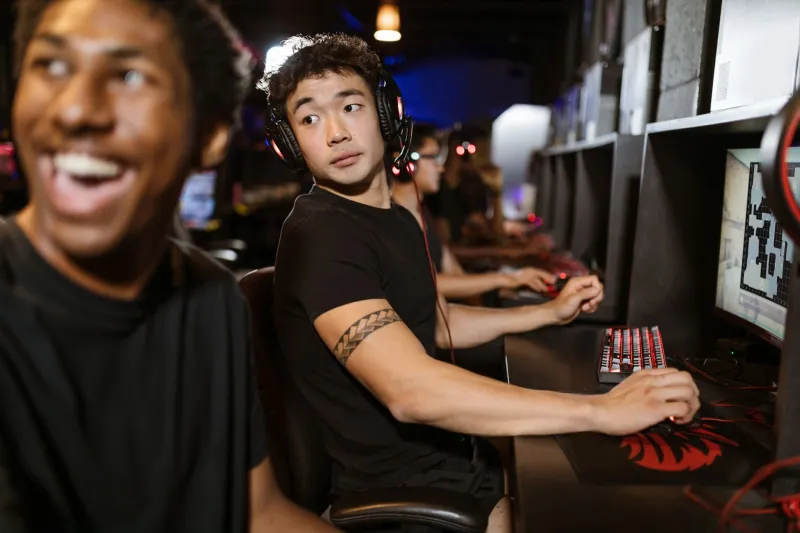
Photo: esports player intense focus competitive gaming tournament, via img.freepik.com
There's a moment every serious competitor knows. You've been absolutely rolling through your bracket. Your mechanics are sharp, your reads are clean, your win rate looks like a ski slope going up. Then some random player walks in running the most baffling, nonsensical strategy you've ever seen — and somehow, embarrassingly, you lose.
It doesn't make sense on paper. You're better. You've put in more hours, studied more VODs, and optimized more builds than this person has probably played total sessions. And yet here you are, staring at a loss screen wondering what just happened.
This isn't a fluke. It's a pattern. And if you want to become truly unbeatable — not just dominant, but dangerous in every situation — you need to understand exactly why it happens.
The Comfort Zone Is Also a Cage
Mastery is a double-edged sword. When you grind a playstyle deep enough, your brain stops consciously processing it. Your decisions become automatic, your responses become reflexive, and your reads happen before you've even registered the situation. That's the goal, right?
The problem is that automation cuts both ways. The same neural grooves that make you lightning-fast against familiar situations make you slower against unfamiliar ones. Your brain is essentially pattern-matching against a library of scenarios it's seen before. When something falls outside that library, there's a lag. A hesitation. A split second where your instincts reach for a response that doesn't exist.
In a high-speed competitive environment, that lag is everything.
Top-level players in games like Street Fighter 6, Valorant, and League of Legends aren't just reacting to what's happening — they're predicting based on what they expect to happen. When an opponent does something genuinely unexpected, that predictive model breaks down. And the more dominant you've become within a specific framework, the harder it is to step outside it in real time.
The Off-Meta Effect
Here's where it gets really interesting. Off-meta players aren't just playing a different strategy — they're playing a different game. They've built their entire skill set around scenarios that most high-level players have never seriously prepared for.
Think about it from their perspective. A player running an unconventional build in ranked has faced the meta a thousand times. They've had to adapt, improvise, and survive against optimal play constantly. Meanwhile, the meta player has almost never had to seriously engage with the off-meta player's gameplan. Who's actually more prepared for this specific matchup?
This is what's sometimes called the "lab monster" problem in fighting game communities. A player can spend hundreds of hours labbing optimal combos and punishes for every top-tier matchup — and then get absolutely dismantled by someone running a low-tier character with a pocket full of unorthodox setups that nobody bothered to study. The lab monster prepared for everything except the things they didn't think mattered.
The psychological dimension makes it worse. Losing to a "lesser" strategy triggers something defensive in elite players. Instead of recalibrating, they double down. They try to force their dominant gameplan harder, as if sheer execution will overcome the strategic mismatch. It usually doesn't.
How the Truly Elite Stay Dangerous
So what separates the players who crumble from the ones who adapt mid-match and turn it around? It's not mechanical skill — both groups have that. It's something closer to strategic humility, and it gets trained deliberately.
The best competitors in the world treat every match as a data collection problem, not just a performance. When something unexpected happens, the instinct isn't to override it with familiar patterns — it's to pause (even mentally, even for half a second), identify what's actually happening, and build a new response on the fly.
Pro players like Faker in League of Legends and top-ranked competitors in fighting game circuits are famous for this. They don't just win with optimal play. They win ugly when they need to. They can abandon their preferred gameplan completely, play reactive and defensive, gather information, and then strike when they've figured out the puzzle. That flexibility isn't accidental — it's trained.
Practically, this means a few things:
Deliberately play against styles you hate. If you never practice against cheese strategies, rushdowns, or off-meta builds, you're leaving a massive hole in your game. Seek out the players who annoy you most and grind those matchups specifically.
Study the losers, not just the winners. VOD review culture in competitive gaming tends to focus on dominant performances. But watching high-level players lose — especially to unconventional opponents — is where the real education is. What got exploited? When did they tilt? Where did they stop adapting?
Train your in-match reset. This is probably the least-discussed skill in competitive gaming: the ability to mentally reset when your gameplan isn't working. Some players can do this naturally. Most need to practice it. That means getting comfortable with the discomfort of not knowing what to do next, and building the habit of curiosity instead of frustration in those moments.
Dominance Isn't the Finish Line
There's a version of being great at a game that's actually kind of fragile. It looks like a monster win rate, a polished playstyle, and a very specific set of conditions under which you're nearly unbeatable. A lot of players live here and call it mastery.
But real mastery — the kind that holds up on the biggest stages, in the weirdest matchups, against the most unpredictable opponents — looks different. It's less about perfecting a single approach and more about building a brain that can problem-solve under pressure, across any situation, without flinching.
The players who dominate consistently aren't the ones who've found the most powerful strategy. They're the ones who've trained themselves to find a strategy, fast, no matter what gets thrown at them.
That's the actual power move. Not having all the answers — being dangerous even when you don't.