Go Hard, Burn Out: Why the Most Aggressive Players Hit Their Ceiling First

There's a certain type of player every competitive lobby knows. Constantly pushing, constantly pressuring, always the first to engage and somehow always the loudest when things fall apart. They're exciting to watch. They're terrifying to play against — at first. But give it a few seasons, and you'll notice something: they're still at the same rank. Still making the same plays. Still wondering why the grind isn't paying off.
Meanwhile, the quiet strategist in the corner has climbed two divisions without breaking a sweat.
This isn't a coincidence. It's a pattern baked into competitive gaming at every level, and understanding it might be the most important skill upgrade you haven't made yet.
The Aggression Trap
Aggression feels like power. When you're constantly pushing the pace, dictating the tempo, and forcing your opponents to react, it genuinely is a form of power — for a while. Early in your ranked journey, raw aggression is incredibly effective. Most players at lower levels can't handle consistent pressure. They fold. You win. You climb.
The problem is that aggression is a high-variance strategy. It trades long-term consistency for short-term impact. Every aggressive move carries risk, and when you're making aggressive moves constantly, you're compounding that risk with every decision. At some point, you hit a skill tier where opponents can punish aggression reliably. And if aggression is your only tool, you're stuck.
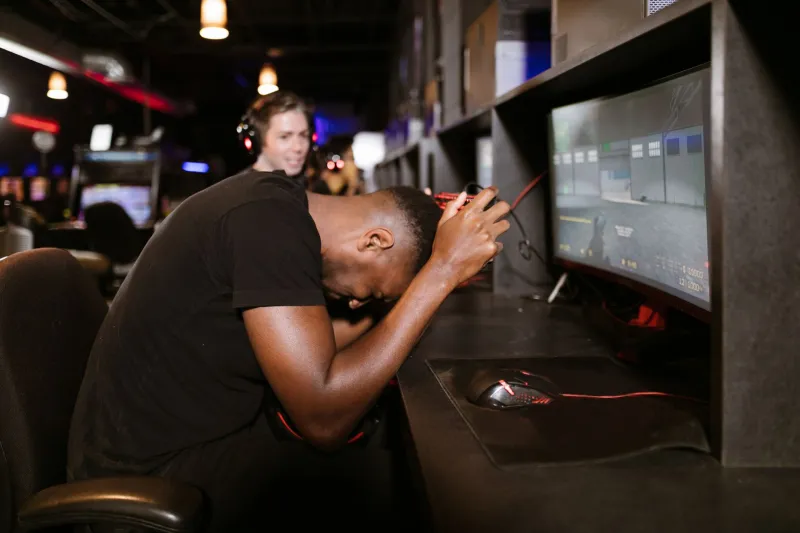
Worse, the mental load of playing aggressively all the time is enormous. You're making snap decisions at full speed, operating on instinct, and burning emotional energy at a rate that simply isn't sustainable. That's how you end up tilting at 2 a.m. after your fifth straight loss, convinced the game is broken when really you just ran out of gas.
Why Strategic Players Build Differently
Strategic players don't look as impressive in highlight reels. They're not the ones landing the flashy outplays or going for the risky one-versus-three. But they're doing something far more valuable: they're learning.
Every measured decision is a data point. When you slow down your decision-making — even slightly — you create space to observe what's actually happening in a match. You start noticing patterns. You start recognizing when your opponent is overextended, when the map is in your favor, when the right call is to not engage rather than force a bad fight.
That kind of awareness compounds over time. A strategic player at month three is noticeably better than they were at month one, because every game adds to a growing mental model of how the game actually works. An aggressive player at month three is often just playing the same month-one game, faster.
Top-tier esports athletes understand this balance instinctively. Watch the best players in any competitive title — whether it's Valorant, Street Fighter 6, or Apex Legends — and you'll see aggression deployed selectively. They're not passive. They're calculated. They choose their moments, and when they strike, it lands with maximum efficiency because they've set it up deliberately.
Recognizing When You're Playing Angry vs. Playing Smart
Here's the uncomfortable truth: most players can't tell the difference in the moment. When you're in the zone and things are clicking, aggressive play feels exactly like smart play. The tell usually comes after the fact, when you're reviewing a loss and realizing you forced five fights you had no business taking.
Some signals that you've crossed from strategic aggression into emotional aggression:
- You're engaging before you've assessed the situation. If your first instinct is always "go in," you're running on autopilot, not strategy.
- You're getting frustrated when opponents don't fight on your terms. Strategic players adapt. Emotional aggressors tilt.
- Your win rate drops as the session goes longer. Aggression is exhausting. If you're noticeably worse in game five than game one, your mental stamina isn't keeping up with your playstyle.
- You're not learning from losses. If every loss feels like bad luck or broken mechanics, you're not in a headspace where growth is possible.
Building the Balance That Actually Wins
The goal isn't to become a passive player. Passivity has its own ceiling, and it's not much higher than reckless aggression. The goal is controlled intensity — knowing when to turn the heat up and when to let the pressure build on its own.
A few practical ways to start shifting that balance:
Give yourself a three-second rule. Before every major engagement, take a breath and ask one question: is this fight on my terms or theirs? You don't need a full analysis. Just that one check-in can interrupt the autopilot loop.
Track your decision points, not just your outcomes. After a loss, don't just ask "what went wrong." Ask "which decisions did I make without enough information?" That's where the growth is hiding.
Set a session limit and stick to it. Aggressive playstyles degrade faster under fatigue. If you know your best gaming window is two hours, stop at two hours. Playing beyond your peak is how you reinforce bad habits instead of good ones.
Study one strategic player in your game. Find someone at a higher rank who plays methodically and watch their decision-making. Not the flashy plays — the boring, correct ones. That's the education most players never get.
The Long Game Is the Real Power Move
UltraPower Games is built around the idea of dominating every game you play. But real domination isn't a sprint — it's a sustained performance. The players who stay at the top aren't the ones who burned brightest early. They're the ones who figured out how to keep the engine running without blowing it up.
Aggression is a weapon. Like any weapon, it's most effective when you know exactly when to use it. Master that timing, and you won't just peak faster — you'll peak higher than the players who went all-in and ran out of runway.
Slowing down your decision-making isn't weakness. It's the upgrade you didn't know you needed.