Stuck at the Same Rank? Here's What's Actually Happening to Your Skill
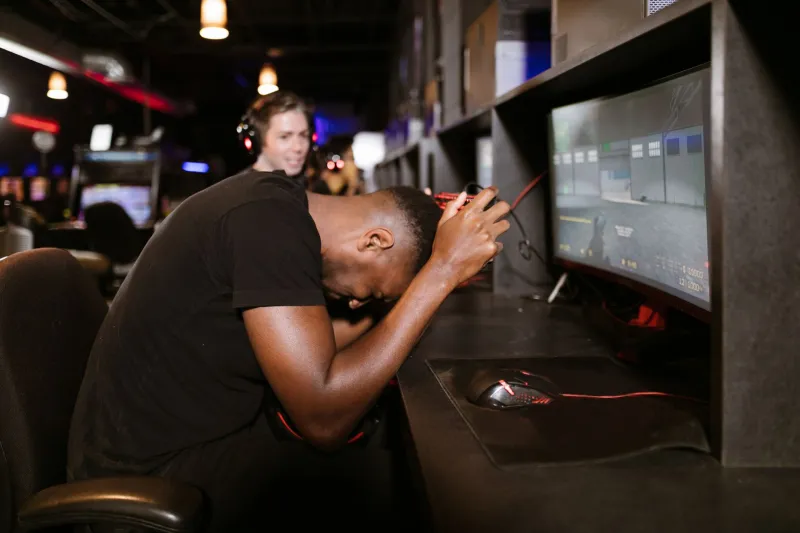
You've been grinding for weeks. Your hours logged are real, your dedication is real, and yet every time you queue up, you're getting the same results. Same mistakes, same losses, same rank. It's frustrating in a way that's hard to explain to someone who doesn't game — because from the outside, it looks like you're putting in the work. So why isn't it clicking?
Welcome to the plateau. It's one of the most common experiences in competitive gaming, and it messes with your head more than any opponent ever could. But here's the thing: hitting a wall doesn't mean you've maxed out. It usually means your brain is doing something very specific — and once you understand what that is, you can flip the script entirely.
Your Brain Is Working Against You (For Now)
When you first pick up a new action game, everything is a challenge. Your brain is firing on all cylinders, forming new neural pathways, absorbing information like a sponge. That's why early progress feels so fast — you're learning something genuinely new every session.
But after a certain point, the basics become automatic. You stop thinking about movement mechanics or cooldown timing because your muscle memory has taken over. That's actually a good thing in theory — automation frees up mental bandwidth for higher-level decisions. The problem? Most players don't redirect that freed-up bandwidth. They just coast. They play on autopilot and call it practice.
This is the psychological trap at the core of every plateau. You feel like you're practicing because you're playing, but your brain has essentially clocked out. Real growth requires conscious effort, and once comfort sets in, conscious effort quietly exits the building.
The Difference Between Playing and Practicing
This distinction is huge, and it's one that separates players who break through ceilings from those who get comfortable living under them.
Playing is jumping into a match and doing what you normally do. Practicing is identifying a specific weakness, isolating it, and deliberately working on it — even when it feels awkward and even when it costs you a match or two in the short term.
Let's say your biggest issue is decision-making under pressure. You panic-engage when you're low on resources, you play too aggressively when you should be defensive, and you blow cooldowns at the wrong time. Just queuing up and hoping it gets better isn't practice. Watching your VODs, tagging those exact moments, and forcing yourself to sit on your abilities for an extra two seconds in your next session — that's practice.
The players climbing past you aren't necessarily more talented. They're just more intentional.
Why Perceived Stagnation Is a Lie Your Stats Tell You
Here's something most players don't consider: you might actually be improving without seeing it reflected in your rank. Skill development in action games is rarely linear. You can spend three weeks absorbing information — better map awareness, improved reads on enemy patterns, smarter resource management — without that showing up on a scoreboard yet.
Think of it like strength training. You can be doing everything right in the gym and still not see visible results for weeks. The adaptation is happening underneath the surface. Then one day, things click. The rank jumps. The performances get cleaner. Players call it "suddenly getting good," but it was never sudden — it was a delayed return on consistent investment.
If you're only measuring growth by your rank or your win rate, you're using a blunt tool to measure something precise. Track smaller things: your average deaths per match, your ability usage efficiency, how often you're dying to the same mistake twice. Those micro-metrics will show you progress that the leaderboard hasn't caught up to yet.
Practical Moves to Break Through
Okay, enough theory. Let's talk about what you can actually do right now.
1. Shrink your focus. Don't try to fix everything at once. Pick one specific bad habit and make it your entire focus for a week. One thing. Players who try to overhaul their entire game simultaneously end up overwhelmed and revert to old patterns.
2. Play outside your comfort zone. If you main a high-damage, low-survivability character, spend time playing a tank or a support role. Learning how other playstyles function from the inside gives you information that directly improves how you play your main. It feels uncomfortable — that's the point.
3. Watch players one tier above you, not the pros. This is a tip that gets slept on constantly. Watching the top 0.1% is inspiring but not always instructive — their decisions don't always translate to your current skill level. Watching someone who's just a step ahead of you is far more actionable. Their decision-making is close enough to yours that you can actually steal it.
4. Take breaks strategically. There's a real phenomenon called consolidation, where your brain processes and locks in new skills during rest. Grinding 12 hours straight when you're tilted isn't just unpleasant — it's actively counterproductive. A day or two away from the game often results in noticeably sharper play when you return. Trust the process.
5. Get an outside perspective. Share a clip with a friend who's better than you. Post in a community forum. Ask someone to actually watch your gameplay. It's humbling, but the blind spots you can't see yourself are almost always obvious to someone else. Ego is the single biggest skill ceiling in competitive gaming.
The Mindset Shift That Changes Everything
At its core, breaking through a plateau is a mindset problem as much as a mechanical one. Players who stay stuck tend to view their skill level as a fixed thing — something they either have or don't. Players who break through treat skill as a process, something that's always in motion, always adjustable.
Every elite competitive gamer has hit walls. Every single one. The difference is they didn't interpret the wall as a ceiling. They treated it as feedback — a signal that their current approach needed to evolve.
You've already got the drive, or you wouldn't still be grinding. Now it's about being smarter with how you direct it. The power to level up has been there the whole time. You just needed a better map to find it.
Stop playing. Start practicing. The rank will follow.