Too Many Modes, Not Enough Mastery: How 'Play Your Way' Is Actually Playing You

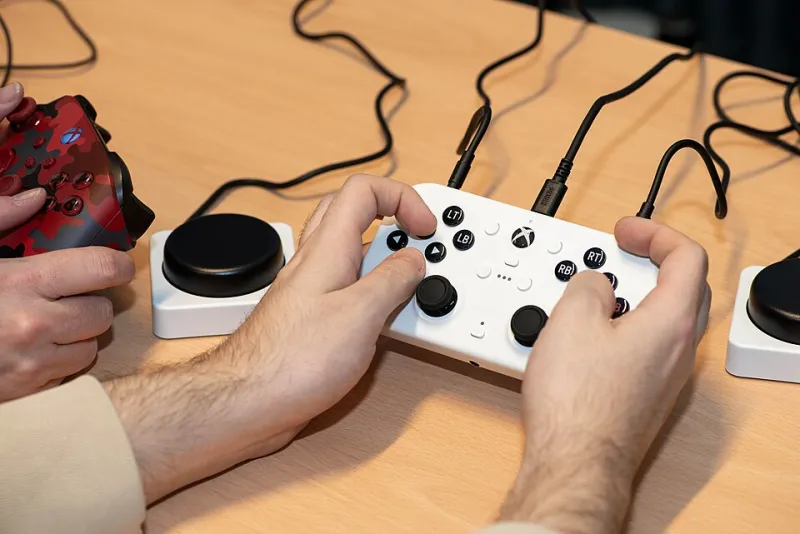
Photo: Rudi Riet, CC BY-SA 2.0, via Wikimedia Commons
Every new big-budget action game ships with the same pitch these days: play your way. Want to stealth through it? Go ahead. Prefer a brawler build? Sure. How about a ranged specialist with crafting mechanics and a survival mode on the side? Knock yourself out. Developers frame all of this as player empowerment — more options, more expression, more game for your money.
But here's the thing nobody in the marketing department is going to tell you: more modes doesn't mean more power. In a lot of cases, it means less.
If you're serious about leveling up — not just having fun, but actually dominating — you need to understand what that sprawling menu of options is really doing to your development as a player.
The Buffet Problem
Think about the last time you went to an all-you-can-eat buffet versus a restaurant with a tight, focused menu. At the buffet, you graze. You sample. You never commit. You leave full but weirdly unsatisfied, because nothing got your full attention.
Game modes work exactly the same way.
When a game offers you a battle royale queue, a ranked 5v5 mode, a casual deathmatch, a story-driven co-op campaign, and a weekly limited-time event — all with slightly different rules and reward structures — you don't master any of them. You sample all of them. And sampling is the enemy of dominance.
Every mode has its own meta, its own pacing, its own unspoken rulebook. Jumping between them feels productive because you're always doing something. But your skill isn't compounding. It's fragmenting.
What the Legends Actually Did
Look back at the games that built the most dominant player communities in competitive history. Street Fighter II. StarCraft: Brood War. Early Counter-Strike. Quake III Arena. These weren't games drowning in alt-modes and playstyle flexibility. They were singular, almost brutal in their focus. One core loop. One competitive format. One path to greatness.
That constraint wasn't a design failure — it was the whole point. When there's only one arena, every serious player ends up in the same place, grinding against each other, developing shared language, shared strategies, shared mastery. The skill ceiling rose because everyone was climbing the same wall.
Comparatively, when you spread a playerbase across six different modes, you dilute the competition in each one. The best players aren't necessarily in your queue. The meta isn't as refined. The feedback loop — losing, analyzing, adjusting, winning — gets muddier.
The Psychology of False Progress
Here's where it gets a little uncomfortable. Game designers are smart. They know that variety creates the feeling of progression even when your actual skill isn't moving.
You grind ranked for a week, hit a wall, feel frustrated. So you hop into the limited-time mode for a change of pace. You do well there because it's new and chaotic and the skill gap is compressed. You feel good. You feel like you're back on track. Then you return to ranked no better than when you left.
That cycle — frustration, escape, false reward, repeat — is practically engineered into games with heavy mode variety. It keeps you engaged without necessarily making you better. And if your goal is to be genuinely elite, that loop is a trap.
The players who actually break through their skill plateaus are the ones who sit in the discomfort. They stay in ranked. They replay the losses. They don't have a softer mode to retreat to when things get hard. Constraint, weirdly enough, accelerates growth.
The Generalist Trap
There's a concept in competitive sports called the generalist trap — athletes who train across too many disciplines and never develop the specific muscle memory, pattern recognition, and situational instinct that elite specialists carry. Gaming has its own version.
Players who bounce between modes and playstyle archetypes become adaptable, sure. But adaptable isn't the same as dominant. Dominant players have depth. They've seen every variation of the same situation hundreds of times in the same context. Their reactions aren't conscious decisions anymore — they're reflexes.
When you split your hours between a stealth build one night, an aggressive brawler the next, and a support role on the weekend, you're not building that depth in any of them. You're staying perpetually in the early-to-mid learning curve across all three, which feels like variety but plays like stagnation.
When Flexibility Becomes a Crutch
The 'play your way' philosophy also quietly enables something most players won't admit to: dodging their weaknesses.
Struggling against aggressive close-range fighters? Switch to a ranged-focused mode where that pressure doesn't exist. Losing too many macro-strategy games? Jump into a fast-paced skirmish mode where macro doesn't matter. Every time you swap modes to escape a specific challenge, you're leaving a hole in your game that will show up the moment you face a serious opponent.
The best players on any leaderboard will tell you the same thing in different words: they found their weak points and stayed there until those points weren't weak anymore. That only happens when you can't just mode-hop your way out of the problem.
How to Use Mode Variety Without Getting Played By It
None of this means you should ignore every mode that isn't your primary competitive format. Used intentionally, alternate modes can actually sharpen specific skills — a slower-paced mode might help you analyze decision-making, a chaotic limited-time event might stress-test your mechanics under pressure.
The key word is intentionally. Here's a framework that actually works:
Pick one primary mode and treat it like your job. This is where you track your stats, review your replays, and measure your real improvement. Everything else is supplementary.
Use alternate modes as targeted training tools, not escapes. If you're drilling a specific mechanic — positioning, aim, resource management — find the mode that isolates that variable. Go in with a goal, not just vibes.
Set a ratio and stick to it. Something like 80% primary mode, 20% everything else. It sounds rigid, but it keeps your development on track without making the game feel like homework.
Treat mode-hopping as a red flag. When you feel the urge to jump to a different mode, ask yourself whether you're looking for growth or running from friction. Nine times out of ten, the friction is exactly where you need to be.
The Real Power Move
UltraPower Games isn't just a name — it's a mindset. Real power in gaming doesn't come from having the most options. It comes from going deeper than anyone else in the options that actually matter.
The games that produced the most iconic, dominant players in competitive history weren't the ones with the most modes. They were the ones that forced everyone into the same crucible and let the grinders rise. That principle hasn't changed just because modern games ship with a full suite of alternatives.
More modes is a feature. Mastery is a choice. And right now, the menu is betting you won't choose mastery.
Prove it wrong.