Why Every Game Keeps Getting Stronger (And Why That's Breaking Competitive Play)

There's a moment every competitive gamer knows. You log back into your favorite ranked title after a patch drops, load into your first match, and something feels off. Abilities hit harder. Movement feels faster. That character you spent months learning to counter is suddenly doing something completely new — and absolutely disgusting. Welcome to the power creep cycle, and right now, it's spinning faster than ever.
Across shooters, MOBAs, hero-based action games, and battle royales, developers are locked in a strange paradox: they need to keep games feeling fresh and exciting, but every time they push the ceiling higher, the floor has to come up with it. The result is an escalating arms race that's quietly reshaping what competitive play even means.
What Power Creep Actually Is (And Why Studios Keep Doing It)
Power creep isn't new. Trading card game veterans have watched it happen for decades — newer cards systematically outperform older ones because designers need to give players a reason to chase the next set. In video games, the same logic applies. New seasons need to sell battle passes. New characters need to feel worth unlocking. New weapons need a reason to exist.
The problem is that "exciting" and "balanced" are often pulling in opposite directions. When Riot Games drops a new League of Legends champion, that character almost always ships with a kit that feels slightly overtuned. That's not an accident. A flashy, powerful new release generates clips, discourse, and engagement. It gets people talking. And in the attention economy of modern gaming, that matters.
"Every studio knows a weak release gets ignored," says Marcus "Flux" Delgado, a semi-professional Valorant player based in Chicago. "They'd rather ship something strong and nerf it than ship something balanced that nobody cares about. The problem is that those nerfs never fully fix the meta — they just move the ceiling somewhere else."
That ceiling-shifting is the core of the paradox. Nerf one outlier, and suddenly something that was previously just below broken looks dominant by comparison. The meta doesn't stabilize — it migrates.
The Developer's Dilemma
Game designers aren't oblivious to this. In interviews and developer blogs, balance teams at studios like Blizzard, Epic, and Riot have openly acknowledged the challenge of maintaining competitive integrity while keeping content pipelines full.
The tension usually comes down to two competing philosophies. The first is what you might call vertical scaling — where new content is just numerically stronger than old content, pushing overall power levels upward over time. The second is horizontal scaling, where new additions are different rather than better, offering variety without inflating the baseline.
Horizontal scaling is harder to execute but produces healthier competitive ecosystems. Games like Dota 2 have generally leaned this direction, introducing heroes with unique mechanical niches rather than raw stat advantages. The result is a meta that shifts constantly without necessarily getting "stronger" in absolute terms.
Vertical scaling, on the other hand, tends to show up in games with heavy monetization pressure. When a new season's content needs to feel meaningfully better than last season's, the numbers have to go up. And once they go up, they rarely come back down without community backlash.
What It Feels Like in Ranked Play
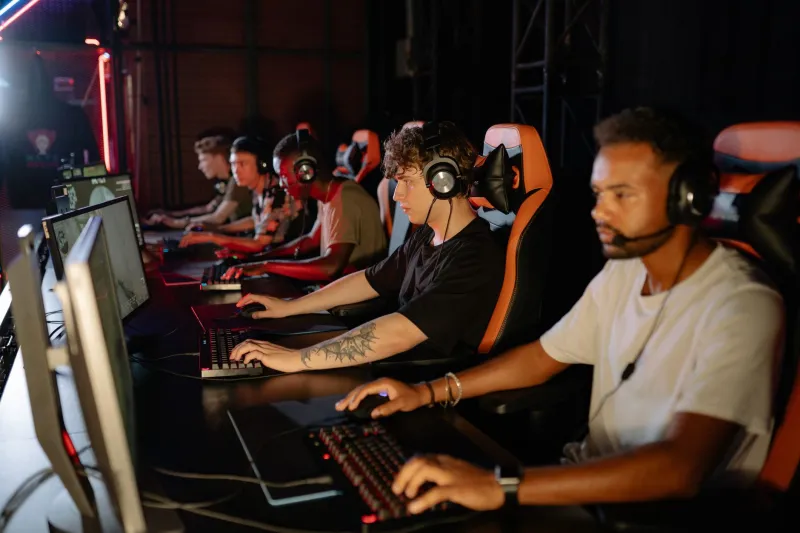
For players grinding competitive ladders, power creep creates a specific and frustrating experience: the constant sensation that your existing knowledge is depreciating.
Jordan "Specter" Walsh, a top-500 Overwatch 2 player from Atlanta, describes it bluntly. "I've put thousands of hours into understanding matchups, positioning, cooldown timing. Then a new hero drops and half of that reads differently. It's not that the game is harder — it's that the game is different, and the difference is always in the direction of more chaos."
That chaos has a measurable impact on ranked environments. When power levels spike unpredictably, skill expression gets muddier. The gap between a well-executed play and a lucky one narrows. Players who've invested in deep mechanical mastery find their edge reduced, while newcomers can sometimes punch above their weight simply by riding a broken-patch wave.
Esports organizations have started factoring patch timing into tournament preparation. Teams now build "patch flexibility" into their rosters — prioritizing players who adapt quickly over those who master specific metas — because by the time a major tournament arrives, the meta they practiced for might already be obsolete.
The Patches That Actually Worked
Not every power-scaling decision ends in disaster. Some developers have managed to raise the ceiling in ways that enriched competitive play rather than destabilizing it.
Fortnite's building mechanics are a useful case study. Epic consistently introduced new movement and combat tools, but the best additions — like the various mobility items and the zero-build mode — expanded what players could do without making existing skills irrelevant. High-level players found new ways to express mastery rather than watching their existing mastery expire.
Similarly, fighting game developers like Capcom have used "system mechanics" — universal tools available to all characters — to raise the skill ceiling without creating character-specific power imbalances. When the entire roster gets access to a new technique, the meta shifts but doesn't fracture.
The common thread in successful power scaling is intentionality. Studios that treat balance as an ongoing design discipline — rather than a reactive fire-fighting exercise — tend to produce competitive environments that stay compelling long-term.
Where Is This All Heading?
Looking ahead, the most interesting development in competitive balance might be the rise of player-influenced patch processes. Games like Teamfight Tactics and various battle royale titles have experimented with data-transparent balance updates, publishing the exact metrics that drove specific changes. That transparency creates accountability and, ideally, more surgical adjustments.
There's also growing discussion in esports circles about "competitive splits" — maintaining separate balance states for ranked and casual modes. If the esports scene runs on a slower patch cadence while casual players get the exciting, chaotic new stuff, both audiences get what they actually want.
Whether that vision becomes reality depends on whether studios are willing to prioritize competitive health over engagement metrics. Given the economic pressures of live-service gaming, that's not a given.
What is certain is that power creep isn't going away. The arms race is baked into the business model. The question for competitive players isn't whether the ceiling will keep rising — it's whether they can keep rising with it. And at UltraPower Games, we'd say that's exactly the kind of challenge worth grinding for.